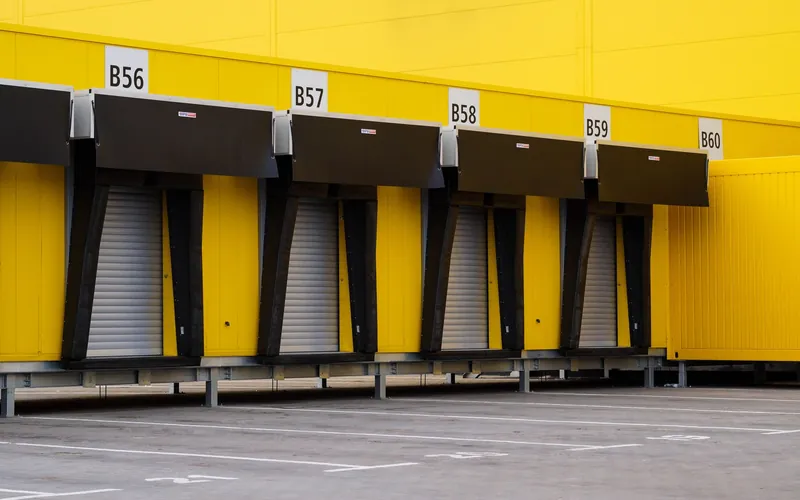
Clear height, dock, power
Industrial & flex
Warehouse, distribution, light manufacturing and flex/service-centre property.
Industrial is underwritten on the box before the tenant. Clear height, column spacing, dock doors, truck court depth and available power decide who can occupy the building if the current tenant leaves — which is what a lender is really buying.
What this programme covers
- Warehouse and distribution, light manufacturing, flex and service-centre
- Single tenant and multi-tenant; owner-occupied handled under the SBA programme
- Functional obsolescence — low clear height, tight truck court — costs leverage
- Long-term leases to credit tenants support longer terms and lower coverage floors
On low-leverage industrial with a long lease, loan-to-value is usually the binding constraint.
Test it on your numbersWhat underwriting actually reads
Re-tenanting cost
What it would cost in downtime, tenant improvement and commission to replace the current occupant. That figure is the reserve.
The building itself
Clear height, bay depth, dock-high versus grade-level doors, sprinkler class, three-phase power and yard. A 20-foot clear building competes with a shrinking pool of tenants.
Environmental
A Phase I is ordered on every industrial file. Prior manufacturing use frequently means a Phase II follows.
Lease structure
Triple-net, modified gross and gross leases produce very different NOI from the same rent. The lease governs, not the rent roll summary.
Who it suits
- Owners of small industrial portfolios
- Sale-leaseback purchasers
- A tenant buying the building it occupies — see the SBA programme
- Not this programme: Heavy manufacturing with specialised process equipment that cannot be re-let without demolition.
Illustrative scenarios in this class
- S-03 — illustrativeSingle-tenant distribution, 11 years remaining$8,260,000 · LTV bindsLease term running eleven years past a ten-year maturity is what allows LTV to be the binding constraint. Coverage lands at 1.34× and debt yield at 9.3%, both clear of their floors.
Questions on this programme
Is a Phase II automatic after a Phase I finding?
No, but a recognised environmental condition has to be resolved before closing, and the usual route is a Phase II. Budget the time.
Do you lend on flex with heavy office finish?
Yes, at lower leverage. Office finish inside an industrial shell is expensive to remove and narrows the tenant pool.